
Spending time in the sun is enjoyable, but without proper protection, the skin can quickly become unbalanced.
The result: dark spots, uneven skin tone, and loss of radiance.
Hyperpigmentation is a common condition caused by an overproduction of melanin. It can affect all skin types and appear at different stages of life.
The good news: effective solutions exist to visibly improve skin tone and restore radiance.
What Are the Most Common Types of Hyperpigmentation?
-Age Spots (Sun Spots)
Sun spots appear on areas exposed to UV rays, such as the face, hands, and shoulders.
They are caused by repeated sun exposure and tend to develop gradually over time.
-Melasma
Melasma is often linked to hormonal changes.
It may appear:
• During pregnancy
• With certain contraceptives
• It mainly affects the face and can be more difficult to reduce without targeted care.
-Post-Inflammatory Hyperpigmentation (PIH)
This type occurs after skin inflammation, such as:
• Acne
• Scarring
• Irritation
These marks can persist if the skin is not treated with appropriate care.
7 Common Myths About Hyperpigmentation
Hyperpigmentation is often misunderstood. Misconceptions can prevent the adoption of the right habits and treatments. Here are the most common and what you should know.
Myth #1: Only Certain Skin Types Are Affected
Reality: All skin types can experience hyperpigmentation. While some may be more prone, factors such as sun exposure, hormones, and inflammation can affect anyone.
Myth #2: Dark Spots Always Fade on Their Own
Reality: Some spots may fade over time, but many persist without proper treatment. A targeted routine helps improve skin tone and radiance more effectively.
Myth #3: Creams Alone Are Enough
Reality: Topical products can help, but their effectiveness may be limited. Many active ingredients struggle to penetrate deeply, where melanin is produced. Complementary approaches can enhance results.
Myth #4: Skincare Always Penetrates the Skin Effectively
Reality: The skin barrier naturally limits absorption. Without appropriate technology, part of the treatment remains on the surface, reducing its effectiveness.
Myth #5: Mesotherapy Is Only Available in Clinics
Reality: Today, mesotherapy-inspired solutions are available for at-home use. These technologies improve product absorption and enhance effectiveness.
Myth #6: Hyperpigmentation Cannot Be Prevented
Reality: Prevention is essential. Daily sun protection and a proper skincare routine help limit the appearance of dark spots and maintain an even complexion.
Myth #7: Dark Spots Are Permanent
Reality: Even though some spots are stubborn, their appearance can be improved with consistent and appropriate care. The skin can gradually regain a more even and radiant look.
How to regain an Even and Radiant Complexion
To improve the appearance of dark spots:
• Protect the skin from sun exposure
• Adopt a targeted skincare routine
• Use specific treatments
• Optimize the penetration of active ingredients
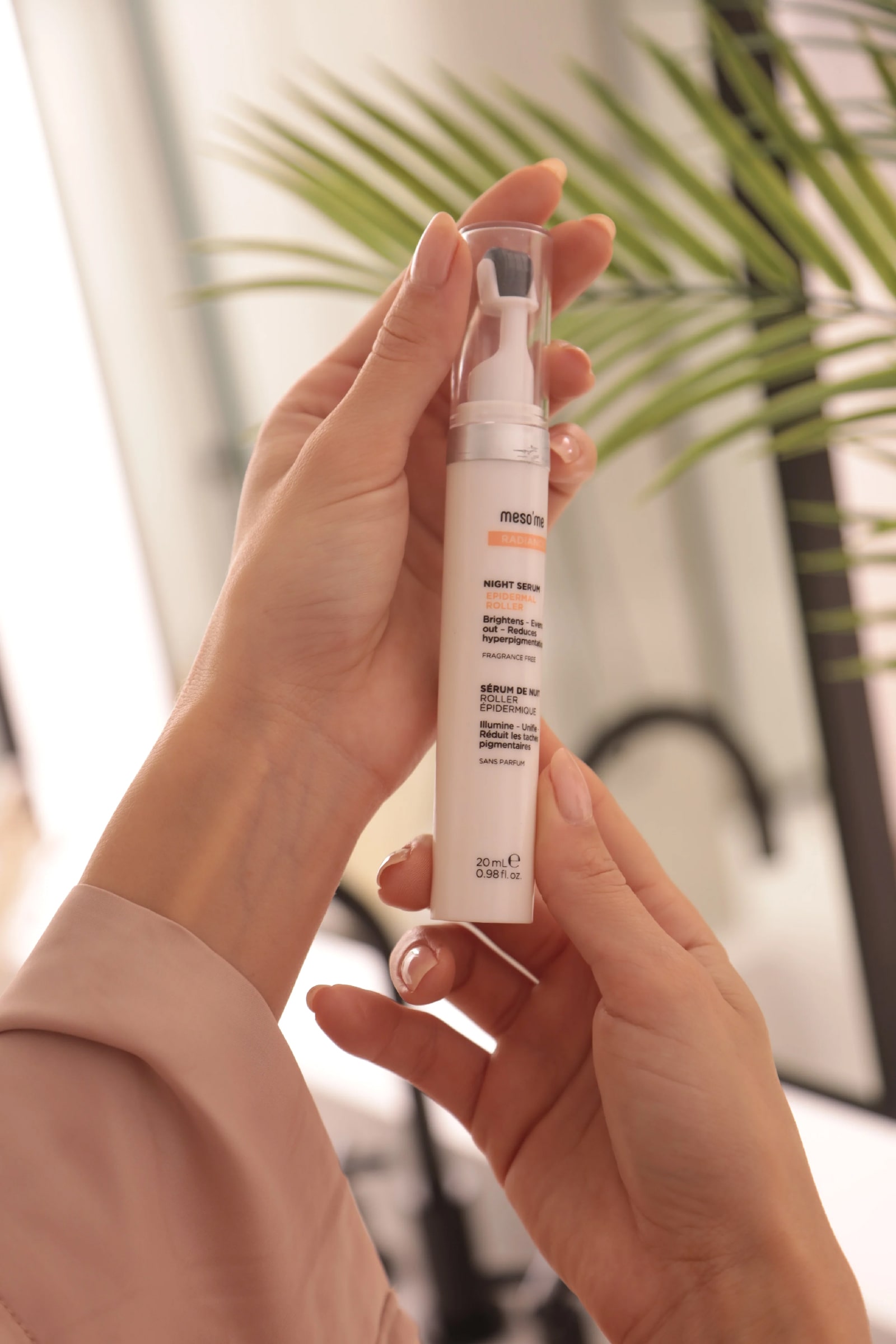
A Mesotherapy-Inspired Approach: meso'me Radiance
meso'me Radiance combines:
• A face roller (microneedling device)
• A brightening meso-serum
This technology helps to:
• Improve the absorption of active ingredients
• Enhance skin radiance
• Even out the complexion
With regular use:
• Skin appears more uniform
• The complexion becomes brighter
• Skin texture improves
FAQ
What is hyperpigmentation?
Hyperpigmentation is a skin condition characterized by the appearance of dark spots. It is caused by an overproduction of melanin, the pigment responsible for skin color.
It can affect different areas of the face and body and is often linked to sun exposure, hormones, or inflammation.
What are the main causes of dark spots?
Dark spots can have several origins. The most common causes are:
• Sun exposure, which stimulates melanin production
• Hormonal imbalances, such as melasma
• Acne or inflammation, leaving marks after healing
• Skin aging, which promotes the appearance of spots over time
These factors can act individually or together, making spots more difficult to reduce without a proper routine.
Is microneedling effective for hyperpigmentation?
Microneedling involves creating micro-perforations in the skin using a roller.
This process helps to:
• Improve the penetration of active ingredients
• Stimulate skin regeneration
• Gradually improve skin tone
When combined with targeted actives, it can help reduce the appearance of dark spots and promote a more even complexion.
How long does it take to reduce dark spots?
The timeline depends on factors such as the cause, depth, and consistency of treatment.
In general:
• Initial improvements may appear within a few weeks
• More significant results develop with consistent use over time
Consistency and daily sun protection are key.
Can hyperpigmentation be prevented?
Yes, prevention plays a crucial role.
Key habits include:
• Applying daily sun protection (SPF)
• Avoiding prolonged sun exposure without protection
• Following a suitable skincare routine
• Treating imperfections early to prevent marks
Preventing hyperpigmentation is often easier than correcting it.