

Hair loss is a natural phenomenon that affects both men and women. On average, a person loses between 50 and 100 hairs per day, which corresponds to the normal hair renewal cycle.
Each hair grows from a follicle located in the scalp. This cycle includes a growth phase, a resting phase, and eventually shedding, before a new hair begins to grow.
However, many misconceptions about hair loss still persist.
Understanding the real causes of hair loss allows you to adopt more effective solutions to maintain scalp health and support regrowth.
Why Do We Lose Hair?
Hair loss can be influenced by several factors that affect the hair cycle.
Common Causes:
• Genetics
• Hormonal changes
• Stress
• Nutritional deficiencies
• Scalp imbalances
5 Common Myths About Hair Loss
Hair loss is surrounded by many misconceptions. These myths often influence daily habits, even though they are not always scientifically accurate. Let‘s discover five frequent beliefs on hair loss and the reality behind each of them.
Myth #1: Hair Loss Is Only Genetic
Reality
Even though genetics can play a role, it is not the only factor. Several elements can influence hair health and contribute to thinning hair:
• Stress
• Nutritional deficiencies
• Hormonal changes
• Certain medications
• Tight hairstyles
Environmental factors and lifestyle can also impact scalp balance and hair quality.
Myth #2: Cutting Hair Makes It Grow Faster
Reality
Cutting hair does not affect its growth. Growth occurs at the root, within the follicle beneath the scalp. However, trimming damaged ends can improve the appearance of thickness and overall hair health.
Myth #3: Hair Loss Is Always Permanent
Reality
Some forms of hair loss, such as androgenetic alopecia, can be permanent. However, many types are temporary.
As in example, hair loss caused by stress, hormonal changes, or deficiencies can often be reversed once the balance of the body and the scalp is restored. A proper haircare routine can help support regrowth.
Myth #4: Brushing Wet Hair Causes More Hair Loss
Reality
Hair is more flexible when wet, which may give the impression of increased shedding. In reality, brushing mainly removes hairs that are already at the end of their cycle. It gives the impression of a more significant hair loss, but brushing is not responsible of the hair loss.
To preserve fragile or damaged hair, gentle detangling with appropriate tools is recommended to avoid breakage.
Myth #5: Only Men Experience Hair Loss
Reality
Hair loss is not exclusively male. Although it is often more visible in men, women can also experience thinning or reduced density.
In women, hair loss may be linked to:
• Hormonal changes
• Stress
• Nutritional deficiencies
• Understanding the cause helps determine the most appropriate care.
Why Scalp Health Is Essential for Hair Growth
The scalp plays a central role in the hair growth cycle.
Each hair originates from a follicle beneath the scalp surface. When this environment is unbalanced or weakened, the growth cycle may be disrupted, leading to hair loss or reduced density.
Maintaining a healthy and stimulated scalp creates optimal conditions for stronger, more resilient hair growth.
How to Support Hair Regrowth
To support regrowth, several approaches can be adopted:
• Adopt a Balanced Diet: Nutrients are essential for scalp health and hair growth. Ensure adequate intake of vitamins (such as biotin and vitamin D) and minerals (such as iron and zinc)
• Limit Mechanical Stress: Avoid pulling or stressing the hair during styling. Use gentle brushes and wide-tooth combs to reduce breakage.
• Maintain a Healthy Scalp: Use suitable treatments and maintain regular hydration to support a healthy scalp environment. Gentle shampoos, nourishing oils, and hydrating treatments are key.
• Use Targeted Haircare Treatments: Serums or treatments enriched with ingredients such as peptides or growth-supporting actives can help stimulate regrowth.
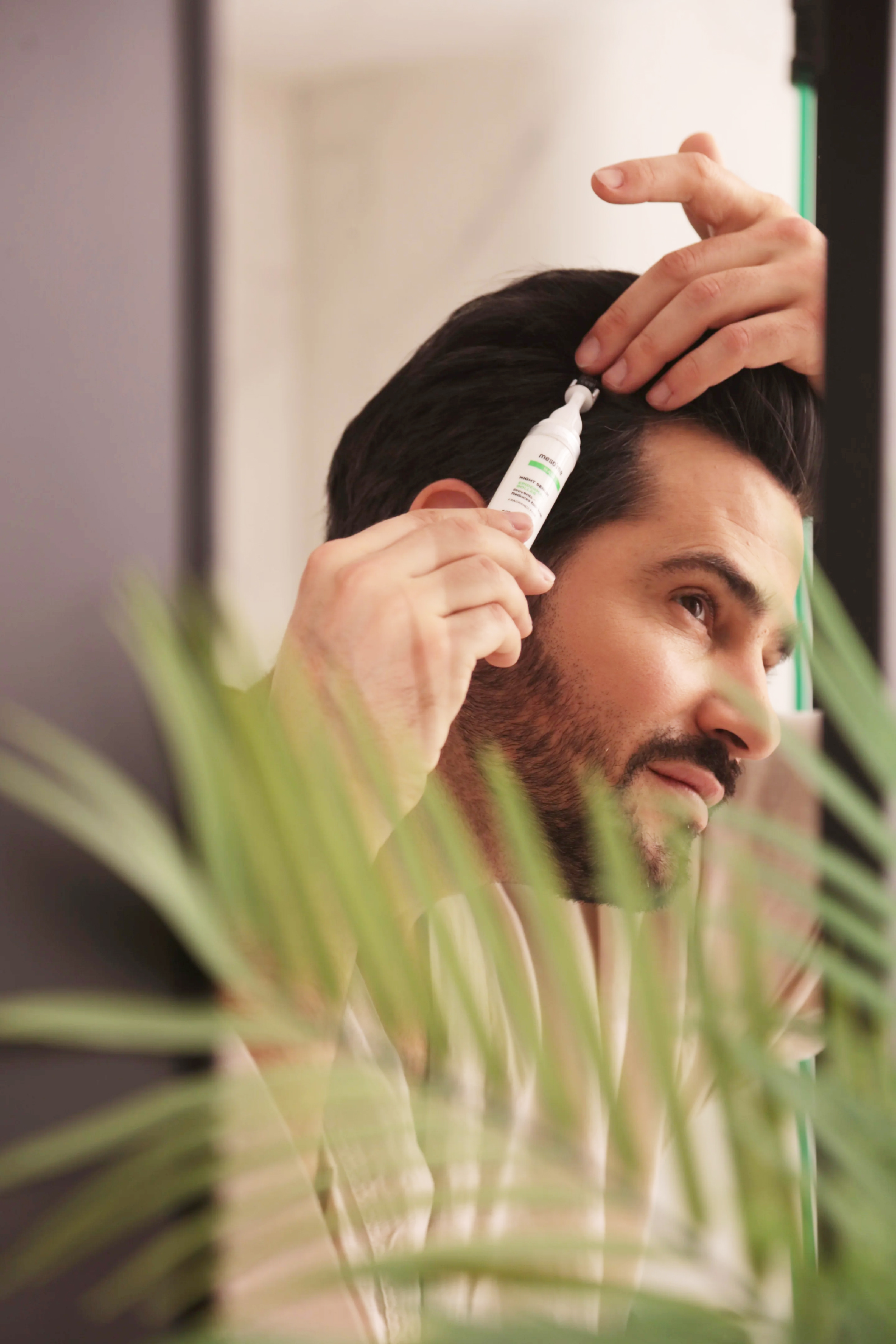
Some techniques inspired by aesthetic medicine, such as scalp microneedling, help stimulate the follicular environment and to promote the penetration of specific active. Microneedling improves blood circulation, activates cell regeneration and enhances nutrient delivery to hair follicles.
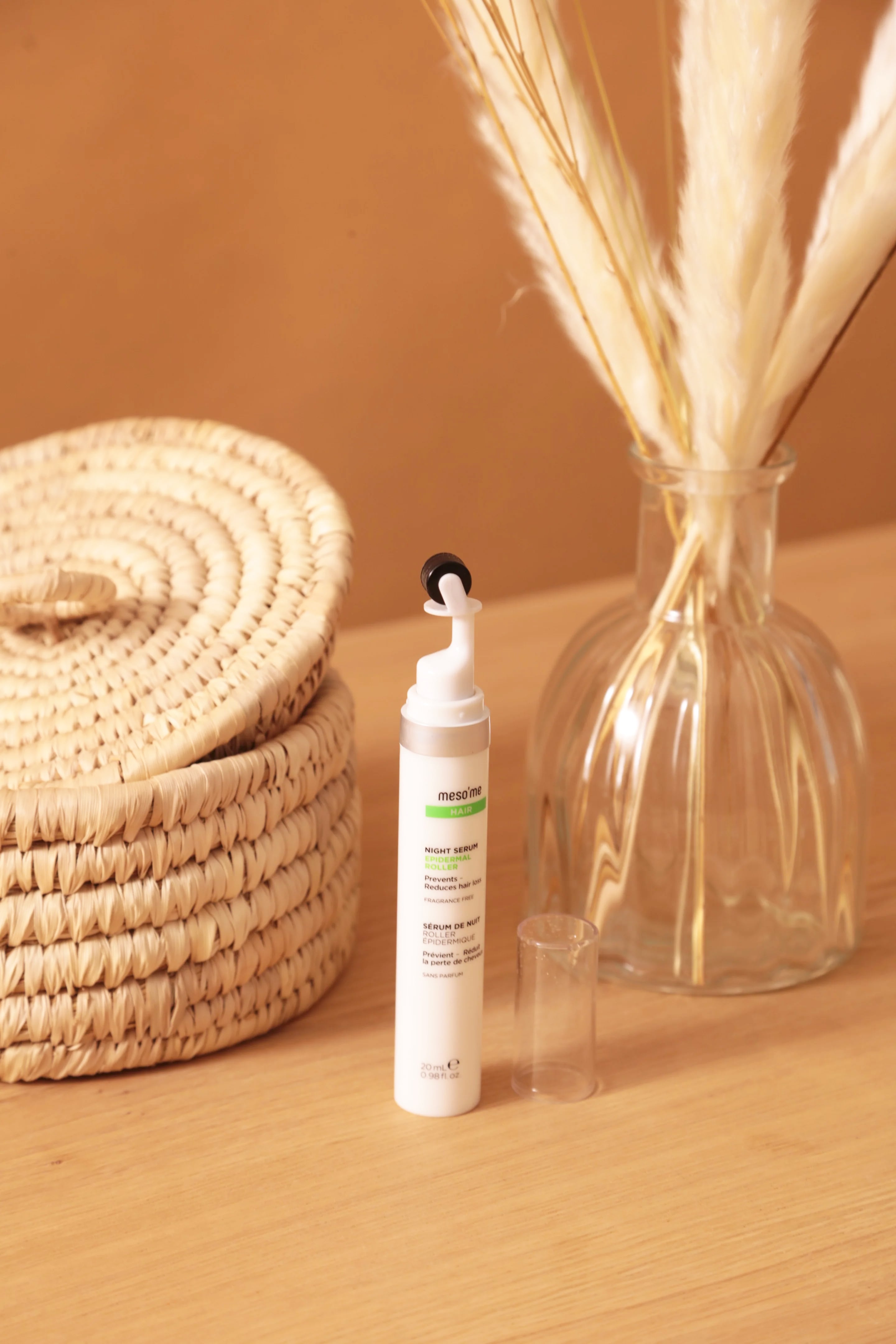
A Professional-Inspired Approach: meso'me Hair
Inspired by clinical techniques, meso'me Hair has been designed to support scalp health and improve hair density at home.
This solution combines a microneedling roller with a targeted serum to act directly on the scalp.
This approach aims to support:
• scalp balance
• follicle activity
• hair quality and density
FAQ
What is scalp microneedling?
It involves using a roller with micro-needles to create tiny perforations in the scalp. This stimulates blood circulation and encourages cell regeneration, supporting hair regrowth.
What are hair follicles?
Hair follicles are small cavities in the scalp where hair grows. Each hair is anchored in a follicle, which plays a key role in the growth cycle.
Is microneedling effective for all types of hair loss?
Microneedling can be effective for many types of hair loss, especially those related to stress or deficiencies. However, for more severe conditions such as androgenetic alopecia, additional treatments may be required.
*American Academy of Dermatology